

As Helping Hands Family grew to 50 clinics, maintaining consistent documentation standards became increasingly complex. Leadership needed a way to reduce the time clinicians spent on administrative tasks while ensuring documentation remained accurate, compliant, and consistent across the organization.
After successfully piloting AI-assisted documentation in eight clinics, Helping Hands Family expanded the initiative organization-wide. The result was measurable improvement in RBT productivity, reduced documentation burden, and greater confidence in note quality.
The Challenge: Scaling Documentation Quality Across 50 Clinics
Maintaining consistent documentation standards across a 50-clinic organization is no small task. As a rapidly growing ABA provider, Helping Hands Family faced pressure on two fronts: reducing the non-billable administrative time their RBTs spent writing session notes, and ensuring those notes met compliance standards before reaching payors.
Manual note writing created variability. Some clinicians were skilled writers; others were excellent behavior technicians who simply found documentation burdensome. The time spent completing notes after sessions was time away from client care, and inconsistencies in documentation created additional review cycles and back-and-forth between clinics and the compliance team.

The Solution: AI-Assisted Documentation At Scale
Rather than implementing a new documentation workflow across all 50 clinics at once, Helping Hands Family took a measured approach. The team began with a focused pilot across eight clinics to evaluate how AI-assisted documentation could support clinicians, improve documentation quality, and reduce administrative burden within everyday workflows.
The pilot introduced AI-assisted session note drafting solution to help RBTs create more consistent session notes while maintaining responsibility for reviewing and approving each one.
The impact was clear. RBT billable productivity improved by four percentage points, and non-billable documentation time decreased by approximately 1.5 hours per RBT per week. With measurable results in hand, Helping Hands Family secured board approval and expanded AI-assisted note drafting across all 50 clinics.
“We piloted it in eight clinics and saw the benefits. The impact on direct care, less time spent on documentation, and lower error rates in NoteGuardAI. Once we had that data, we rolled it company-wide all at once.”
— Jeanine Weichelt, COO, Helping Hands Family
Compliance Confidence: Fewer Errors, Less Back-and-Forth
As Helping Hands Family expanded AI-assisted documentation across the organization, one of the biggest operational benefits was reducing the amount of manual review and correction required from office managers. Fewer documentation issues meant less back-and-forth between teams and more time spent supporting clinic operations.
By combining AI-assisted session note drafting with automated documentation auditing, Helping Hands Family created a consistent workflow from note creation through review. This proactive approach to documentation quality helps reduce compliance friction and creates a more consistent review process across the organization.
“The note drafts going through NoteGuardAI are showing less errors than those that wouldn’t have gone through NoteDraftAI. It’s had the biggest impact on our office managers. They don’t have to intervene and get notes updated and re-uploaded.” — Jeanine Weichelt, COO, Helping Hands Children Services

Training Philosophy: The Clinician Stays In The Loop
Despite the efficiency gains, Helping Hands Family maintained its commitment to documentation training. The organization believes clinicians should understand what makes a compliant, accurate note, so they can effectively review, edit, and approve AI-generated drafts.
This “clinician in the loop” model has proven particularly valuable for newer RBTs, as the combination of structured training and AI-assisted drafting reinforces best practices and reduces unnecessary documentation errors.
“Training gives RBTs the foundation for strong documentation, and NoteDraftAI helps them apply it more efficiently. It saves time by formatting what they document, while keeping them in control of reviewing each note and confirming it meets our standards.”
— Jeanine Weichelt, COO, Helping Hands Family
What’s next: Expanding AI across the care team
With AI-assisted session note drafting and automated documentation auditing working in tandem at the RBT level, Helping Hands Family is already looking ahead to what AI can do for the rest of the care team. For Jeanine Weichelt, expanding AI support represents an opportunity to address broader workforce challenges while helping clinicians spend more time focused on client care.
“As quickly as CentralReach can get AI tools for our BCBAs, I think that is the phase that’s going to jump. That’s going to help with the BCBA capacity and burnout issues we are facing.” — Jeanine Weichelt, COO, Helping Hands Children Services
Documentation that works for the whole care team.
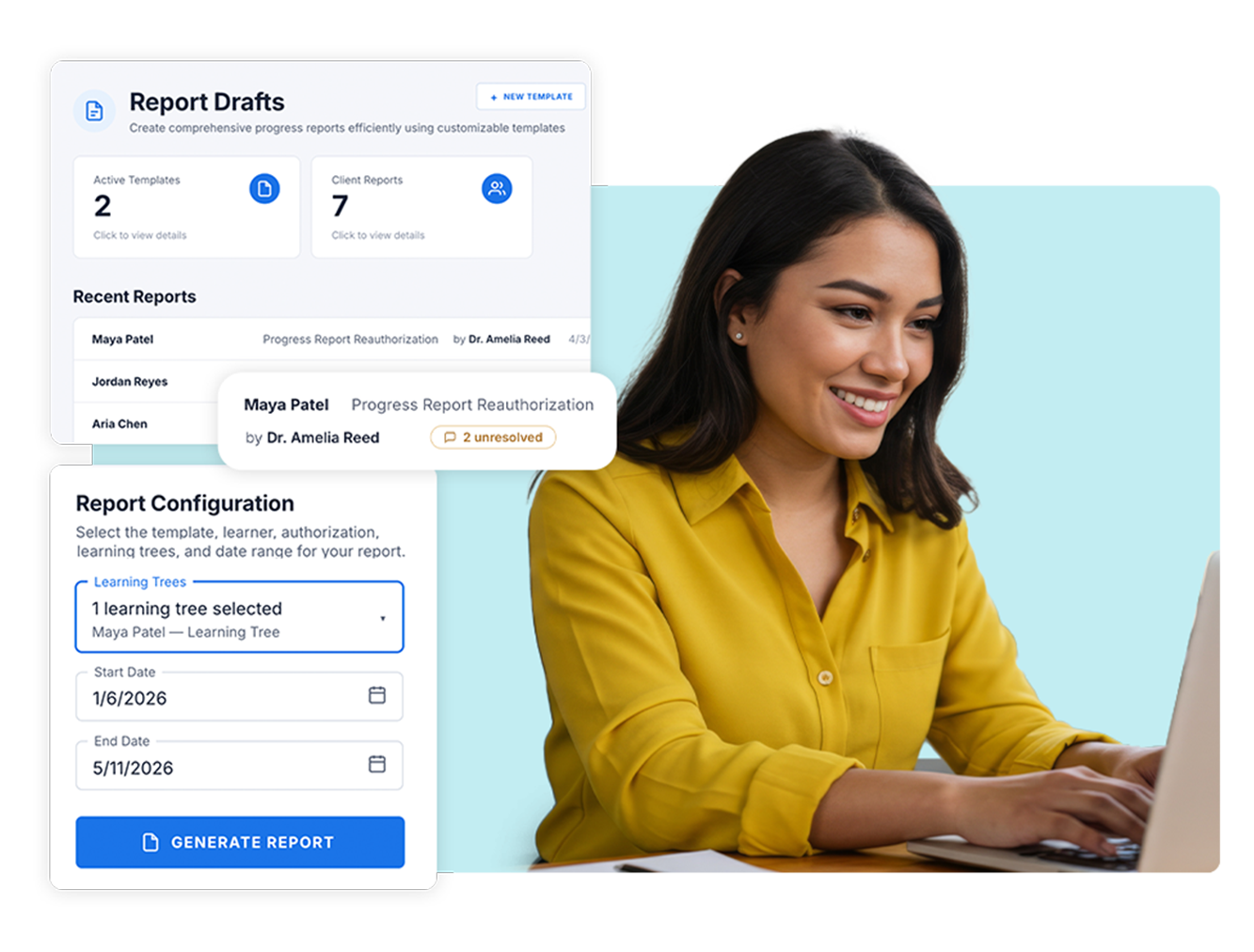
When session data, auditing, and reporting are connected at the source, clinicians spend less time on admin and more time on care.
Posted in Clinical, Practice Management
You may also like...
Related information and stories

RBT Career Path in 2026: RBT Salary, Growth & Opportunities
Registered Behavior Technicians (RBTs) are the backbone of an Applied Behavior Analysis (ABA) organization. They directly provide critical medically necessary services, helping individuals with autism and other developmental differences build skills and…
Timely Session Notes: The Fastest Path to Cleaner Billing and Lower Audit Risk
In many ABA organizations, billing delays don’t start in the billing department. They start with late session notes. When documentation is delayed, the entire healthcare revenue cycle slows down. Billing teams can’t…
How Helping Hands Uses AI to Enhance Clinical Accuracy and Confidence
Helping Hands Family, a provider of quality ABA therapy on the East Coast, recently implemented CR NoteGuardAI. Their goal was to deepen their documentation oversight and support clinical consistency across…